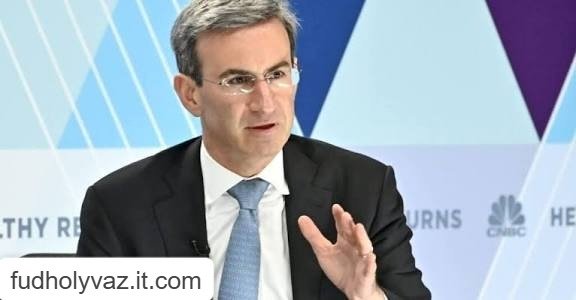
Introduction to Peter Orszag
Peter Orszag is a notable American economist whose career has spanned various critical roles within both the public and private sectors. Born on December 16, 1968, he gained prominence as the Director of the Office of Management and Budget (OMB) during the Obama administration. This position allowed him to influence nationwide fiscal policies and governmental budget strategies, significantly shaping economic discussions during a pivotal era.
Orszag’s educational background laid the groundwork for his distinguished career. He obtained a Bachelor’s degree from Princeton University, followed by a Ph.D. in economics from the London School of Economics. His academic prowess was further demonstrated during his tenure as a professor at the University of Chicago, where he enhanced the economic curriculum and mentored aspiring economists.
In addition to his government service, Orszag has held various influential roles in the private sector. Following his time at OMB, he became the Chief Executive Officer of Citigroup’s Investment Intelligence unit. His expertise in economics has also made him a sought-after speaker and a respected commentator on fiscal policies, healthcare reform, and economic forecasts.
Throughout his career, Orszag has contributed significantly to public policy discussions, particularly concerning healthcare and fiscal sustainability. He authored numerous papers and articles focusing on economic theories and policies, thereby establishing himself as a thought leader in the field. This overview underscores how Peter Orszag’s professional achievements and contributions have earned him both respect and visibility in economic circles.
As we delve deeper into the discussion surrounding Peter Orszag bald, it is essential to recognize the multifaceted nature of his profile, which combines expertise, service, and, uniquely, the subject of his appearance. His career successes have often been paralleled with public interest in his personal attributes, including his baldness, which has sparked curiosity and discussion among the public and media alike.
The Evolution of Peter Orszag’s Look
Peter Orszag, a prominent figure in American economic policy, is not only recognized for his intellectual contributions but also for his evolving appearance throughout his career. One aspect that has attracted particular attention is his baldness, which has become a defining characteristic of his public persona. Orszag’s transition from a full head of hair to a notably bald look marks a significant evolution that reflects both personal and public perceptions.
In his earlier years, Peter Orszag sported a full head of dark hair, which was typical among professionals in his field at the time. However, over the years, as he rose through the ranks of policymakers and economists, his hair began to recede. Gradually, he adopted a more clean-shaven look that many now associate with him. This change sparked various discussions in media circles and among the public about the implications of his baldness.
The media coverage surrounding Peter Orszag’s baldness often highlights societal attitudes towards hair loss. For many individuals, particularly men, baldness can evoke feelings of anxiety regarding age and image. Orszag’s embrace of his baldness can be perceived as a statement of confidence and authenticity, challenging conventional beauty standards in the professional realm. By not disguising his baldness, he may inadvertently convey a message that dismisses trivial judgments based on appearance.
Public reactions to Orszag’s hairstyle choices have varied, with some seeing his baldness as a symbol of maturity and wisdom, while others may view it as a sign of aging. Despite the diverse reactions, one cannot deny that the evolution of Peter Orszag’s look has added a layer of complexity to his public image. It serves as a reminder that personal attributes, such as hair loss, can influence how individuals are perceived in professional environments.
Cultural Perspectives on Baldness
Baldness has long been a topic of discussion, inviting varying societal views that shift over time and context. People’s perceptions of baldness can be influenced by various factors, including age, gender, and cultural background. Using Peter Orszag’s case as a reference point, we can delve deeper into the intricate stereotypes and biases that accompany this phenomenon. As a prominent figure in the public eye, Orszag’s baldness has attracted both commentary and intrigue, bringing forward the larger conversation about how baldness is perceived within society.
In many cultures, baldness is often associated with aging and can evoke a sense of vulnerability. This stereotype is notably pronounced in professional settings where appearances play a significant role in career advancement and interpersonal dynamics. Research suggests that individuals view bald men as authoritative but often perceive them as less attractive. Consequently, this duality presents a unique challenge for individuals like Peter Orszag, who navigate both professional responsibilities and public scrutiny in their roles.
Conversely, there has been a noticeable shift in attitudes toward baldness in recent years, particularly with the rising acceptance of diverse appearances in popular culture. Celebrities and public figures embracing their baldness have contributed to a gradual redefinition of beauty standards, promoting a narrative that celebrates authenticity and self-acceptance. This shift has prompted a reevaluation of previously held biases, suggesting that baldness might no longer carry the same stigma it once did.
Despite this progress, societal pressures remain ingrained. For some, the decision to embrace baldness can be challenging, as they contend with the lingering ideals of attractiveness perpetuated by media and cultural norms. As we examine Peter Orszag’s experience, we can reflect on the broader implications of baldness, highlighting both the challenges and evolving perspectives that accompany this unique trait.
Conclusion: The Impact of Personal Appearance in Public Life
In examining the intriguing case of Peter Orszag’s baldness, we uncover various insights that extend beyond individual circumstances to broader societal implications. Public figures often serve as focal points for scrutiny, and their appearances can significantly influence public perception. In the case of Peter Orszag, his baldness might appear to be a mere physical trait, yet it opens a dialogue about personal image in high-profile professions.
Personal appearance, as evidenced by Orszag’s public persona, plays a crucial role in shaping credibility and authority. Individuals in leadership positions frequently face biases related to their looks, which can inadvertently inform how they are received by the public and peers alike. A polished image may enhance perceived professionalism, whereas an unconventional look could spark unnecessary debate about competence.
Further exploring the implications, it is essential to consider how attributes such as baldness can intersect with societal norms and expectations. In a world often fixated on youth and vitality, baldness can evoke diverse responses ranging from esteem to ridicule. For someone like Orszag, whose career is marked by intelligence and eloquence, balancing the weight of public expectations with personal authenticity can be particularly challenging.
Ultimately, the dialogue surrounding peter orszag bald serves as a microcosm of broader cultural attitudes towards appearance. It reminds us that outward appearances are not just trivialities but can influence crucial judgments in professional environments. As society continues to evolve, the significance of one’s appearance, including conditions like baldness, will likely remain a relevant topic for conversation, reflecting the ways we assess capability and trustworthiness among leaders.
